
Following on from our discussion of flaying techniques and knives in Part 1. The Boltons of the Age of Heroes were said to wear the skins of defeated enemies as cloaks. In Histories and Lore: House Bolton (narrated by Michael McElhatton), Roose Bolton also denies the existence of a secret chamber in the Dreadfort hung with the skins of the enemies of House Bolton, it is questionable if he can be believed. If skins were to be turned into cloaks or kept as trophies they would need to be treated so that they would not decompose, while retaining their flexibility and suppleness. This process is known as tanning, treating the skins of animals to turn them into leather.
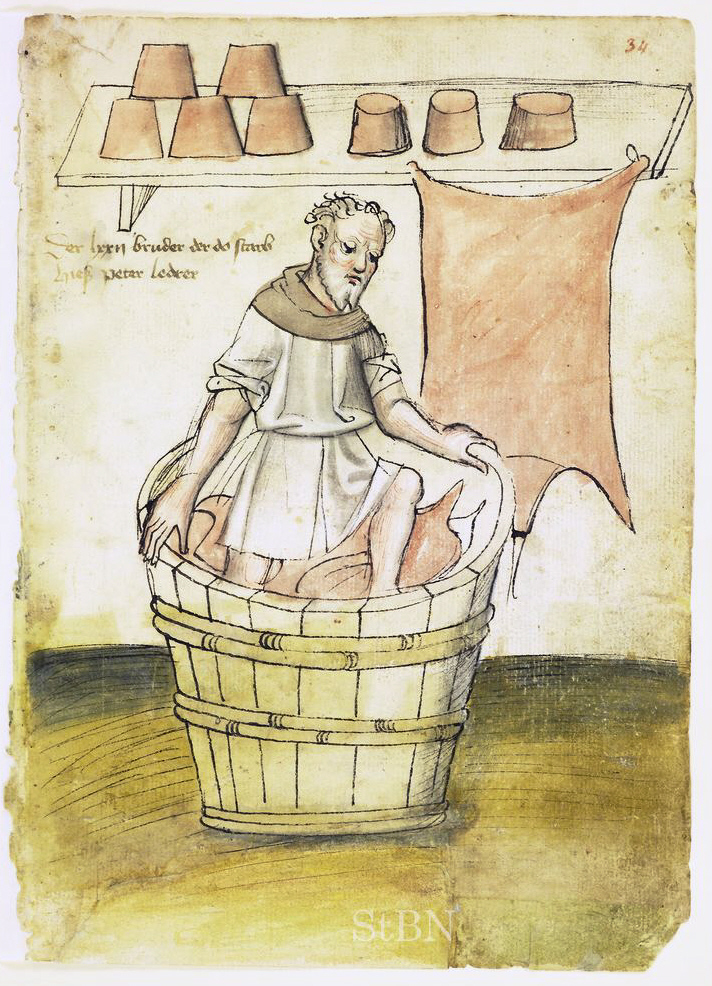
The Reek. Tanning using ancient and medieval methods was a noxious process and tanneries were often in the poorest part of the town. Skins arriving at the tannery were stiff and covered in gore and adhering fat, they needed to be soaked in water, then cleaned and picked clean of flesh and fat before the hairs were removed, often by soaking in urine. The hairless skins were then “bated,” softened by having excrement pounded into them, bating was often done in a vat where the tanner would trample the excrement into the skins with his bare feet for up to three hours. Dung-gatherers and scavengers scoured towns and cities for the tanner, and pots were placed in the streets to collect urine for the tanning process. The smell of the urine, excrement, and rotting flesh and scrapings made the tannery smell revolting. A tannery in the caves under Nottingham city centre is recreated in the City of Caves attraction as it appeared, and smelled, while it was in use between 1500 and 1640.
Comparisons of the sinus bones from rural and urban medieval cemeteries shows that people living in the poor urban areas would have suffered with sinusitis (sinus infection), which can be caused by noxious pollution such as tanneries. The sinuses are air-filled spaces in the skull, around the nasal area and connecting to the nose, chronic (long-term) infection leads to changes in the bone in the floor of the sinuses, which becomes inflamed and rough, or erodes away leaving pits and holes. 603 skeletons from Wharram Percy, a deserted medieval village site in the Yorkshire Wolds, abandoned in the early sixteenth century, were compared with 1042 medieval skeletons from St Helen-on-the-Walls, a poor parish in York city. Only 39% of the rural folk of Wharram Percy had the signs of sinusitis, while 55% of the city dwellers were affected.
Tanning is a process of many stages, those described above are just some of the early steps that have to be followed before the actual tanning part of the process begins, where the skin is immersed in vats of tannin concentration that permeates them, making them resistant to water and bacteria. Tannins are a group of chemicals that are found in many plants and in medieval times the bark of oak and chestnut trees would have been the main source of tannins.
The Hunt. Having a tannery in the grounds of a castle such as the Dreadfort would be unheard of, the entire castle precinct would be stunk out with the smell of urine, excrement and rancid dead tissue. The stench would make the Lord of the Dreadfort stink of shit and it would be impossible to hide the fact that the Boltons were still skinning their enemies centuries after they bent the knee to the Starks and gave their word to stop the practice. However, there are other ways to tan hides which the Boltons could have used covertly over the centuries when they had supposedly stopped flaying. Two of these techniques are used by hunter-gatherers, who do not have access to tanneries and most of what we know of them comes from Native Americans, as hunters the Boltons would probably have known these methods since the Dawn Age.

Buckskin is a preserved animal skin, usually that of a deer, where it gets its name from, but the method can be used on any animal. Leather is actually a completely different product from buckskin as it is tanned using chemicals, modern leather called buckskin is often tanned with chemicals and then dyed to look like buckskin. After being scraped, dressed and stretched, the skin is smoked to preserve it, this is done by folding and fixing it into a bag, which then has smoke funnelled into it, before being turned inside out and repeated. The great hall of the Dreadfort is known as a smoky place, the wooden rafters of its high vaulted ceiling blackened by smoke. Another method is brain tanning, which uses the brain of the animal mashed into a paste to tan the skin, practically all animals have enough brain to tan their own skins.
Ultimately, there would be nothing to stop the Boltons from getting human skins processed into trophies and wearable cloaks as leather and skins were so vital to the medieval way of life. Tanneries were so widespread that they would easily have had access to a tanner they could get to do their bidding.
The Red King Rises. There are some notable fan theories about Roose Bolton, including one known as the “Bolt-on” theory. This theory goes that Roose Bolton is some kind of creature that can live in other people’s skins, possibly a skinchanger or half-White Walker, that he has lived for hundreds of years and is preparing to take Ramsay’s skin to continue his extended lifespan unnoticed. Roose’s cold personality and incredibly pale eyes are often cited as an indication that he may be something of the Other, but could they not be the mark of a Targaryen or Valyrian ancestor?

We have never seen any indication that Roose has any supernatural powers, only that his appearance and demeanour are unusual and he has a terrifying reputation for his cruel and calculating nature. An example of a real life leader who inspired such fear and rumours would be Vlad the Impaler (1431-1476 or 1477), three times in the fifteenth century he was king of Wallachia, a small kingdom which is now part of Romania. A formidable general and guerilla fighter, Vlad III Dracula, as he was known during his lifetime, was like Roose Bolton a believer in draconian punishments and was known for a particular cruel and unusual execution, impalement. Vlad was part of the inspiration for Bram Stoker when he wrote Dracula and is often associated with vampirism in popular culture.

The possibility of Roose being a skinchanger or the half-human son of the Night’s King seems remote. During their long wars in the Age of Heroes the Red Kings of House Bolton are said to have worn cloaks made from the skins of defeated Starks. Presumably at some time the Starks have also killed the head of House Bolton, if this was the creature that is now Roose Bolton one of the only explanations for it to survive would be skinchanging into the next Bolton in line. Brandon Stark is the only skinchanger known to have successfully entered into the body of another human, albeit a simple-minded one. Amongst wildling skinchangers it is regarded as an abomination to enter the body of another person and even the highly experienced Varamyr Sixskins fails in his attempt to do it. However, Roose’s moral compass seems nonexistent and any ability he has a skinchanger remains completely unknown.
Perhaps an interesting middle ground theory is that Roose Bolton is human but is a secret worshipper of the Great Other and the White Walkers, in the same way that Craster was. House Bolton does not have an ancestral Valyrian steel greatsword, one of the only substances that can kill White Walkers, and Roose is known to secretly still practice the banned tradition of the first night, where the lord of the manor beds the bride on the first night of her marriage. After Roose enforced this right with the miller’s wife who has Ramsay’s mother, a year later she brought his bastard to him, and he admits he would have thrown the baby down a well or in a river until he saw the baby had his eyes. Were other bastards given or sacrificed to the Great Other, the same way that Craster’s male offspring were? This seems impossible as the Dreadfort is only slightly further north than Winterfell and both are a long way south of the Wall, through which the White Walkers cannot pass. But could the contents of the Bastard Letter and the threat of an attack on the Night’s Watch by the Boltons be motivated by a hidden agenda to weaken the Wall, that the White Walkers might pass through it?
As Lady Dustin thinks in A Dance With Dragons, “Lord Bolton aspires to more than mere lordship. Why not King of the North?” With Tywin Lannister dead and the Iron Throne preoccupied with other problems it seems tempting for Roose Bolton to crown himself as the King of the North and reinstate the legacy of the Red Kings. However, he must realise as he is already Warden of the North that he would gain little or nothing, he already enjoys the position and power that his rivals the Starks once held in heredity. To crown himself as the new Red King would invite attack from the Iron Throne and possibly the new king of the Iron Islands, a dangerous move for someone who does not have the support of many of the northern houses.

After looking at the evidence it seems that Roose Bolton is human, but such a formidable human that he has acquired legendary status that makes people doubt his humanity, in a similar way to Vlad the Impaler. We only have Roose’s word that there are no cloaks made from human skin or a secret trophy room full of skins in the Dreadfort, and this cannot be relied on, knowing what we know of his betrayal of Robb Stark and the covert means he could be using to tan human skins. Questions remain about Lord Bolton’s intentions and allegiances, but with his inscrutable nature these questions are not likely to be answered soon. Now we have raised the issue of whether he is in league with the Great Other and practicing dark magic. Roose Bolton is known for his frequent leechings, what does he do with those blood-filled leeches? We have seen Melisandre using leeches filled with Gendry’s blood in rituals to kill Robb Stark, Balon Greyjoy and Joffrey Baratheon. If you believe that Melisandre was carrying out a genuine ritual rather than pretending to cause deaths she had already seen foretold in the flames, could Lord Bolton also be using his leeches for blood magic? As he is descended from the Red Kings, Roose Bolton could be said to have the blood of kings within his veins.
Part 3 coming soon.
 Archaeology Game of Thrones
You must be logged in to post a comment.