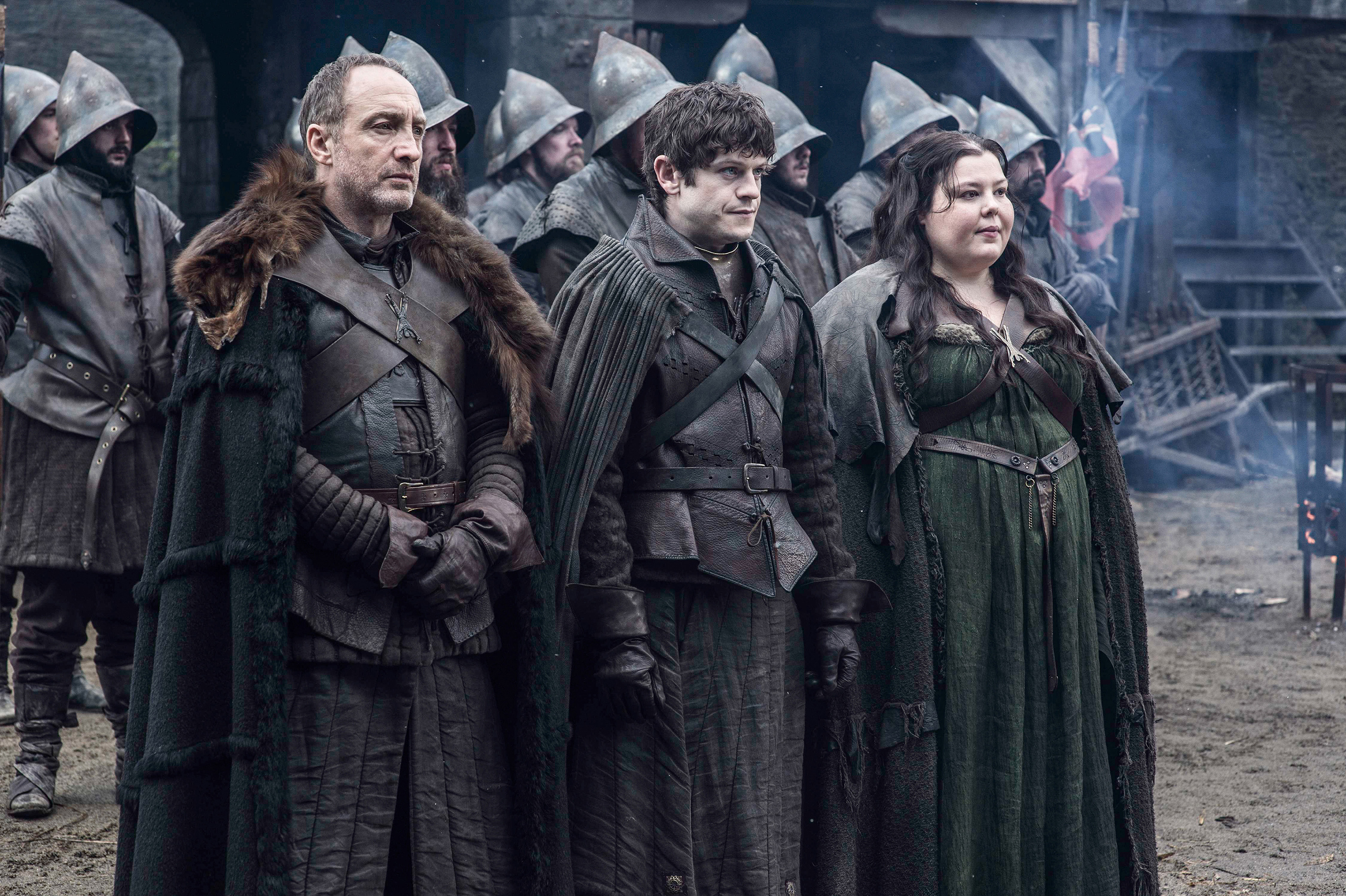
The Boltons are a powerful ancient Northern house with the blood of the First Men, from their seat, the Dreadfort, they ruled the eastern part of the North as the Red Kings. Since the Age of Heroes they fought with their deadly rivals House Stark, the Kings of Winter, until the Starks united the North and Rogar Bolton “the Huntsman” bent the knee to the Starks and became the last Red King. House Bolton are known for their ancient practice of flaying the skin from their living enemies. While this punishment was supposedly ended when they came under the dominion of the Starks, rumours of it still happening persist, although Roose Bolton states that “I suspect my house itself was responsible for spreading such rumours, few weapons are as effective as terror.” The Boltons rule by fear and foremost is the fear of being skinned alive, a defining characteristic which tells us much about the House, its current lord, and his heir.
Secrets of the Flayed Man. There is not a lot of reliable data on flaying available, thankfully few people have been flayed alive in recent centuries, the most noted flayings are those carried out by the Neo-Assyrian Empire (911-609BC) and Cambyses II, a sixth century BC king of Persia, who had the corrupt judge Sisamnes flayed alive. It is often asked how long someone can survive without their skin, with estimates ranging from minutes to days. The correct answer is probably not very long at all, massive shock, blood volume loss, and the skin’s role in regulating body temperature and hydration probably mean that loss of consciousness and death will quickly follow any substantial loss of the full thickness of skin from anywhere other than the limbs. I do remember once reading in a very obscure text that if someone was having their skinned peeled off from the head down, when their chest was exposed they would die if they were still alive at that point.
One reason that flaying may not have become a popular method of execution is that it is not easy to do, especially if you want to remove the skin in one piece. The easiest ways to skin something or someone is to start where there is subcutaneous bone, which lies directly beneath the skin. The top of the head and the ankle are the most obvious places, although there are others such as the elbow. In the HBO series the sigil of House Bolton shows the flayed man hanging upside down on a crux decussata, an X-shaped cross. This would seem to favour a prolonged flaying starting at the external or lateral malleolus, the protruding subcutaneous bones of the ankle joint. With the victim upside down, keeping the head below the heart, and the heart well below the first incision, there would be less chance of unconsciousness or a quick death caused by hypovolaemic shock, loss of blood volume.
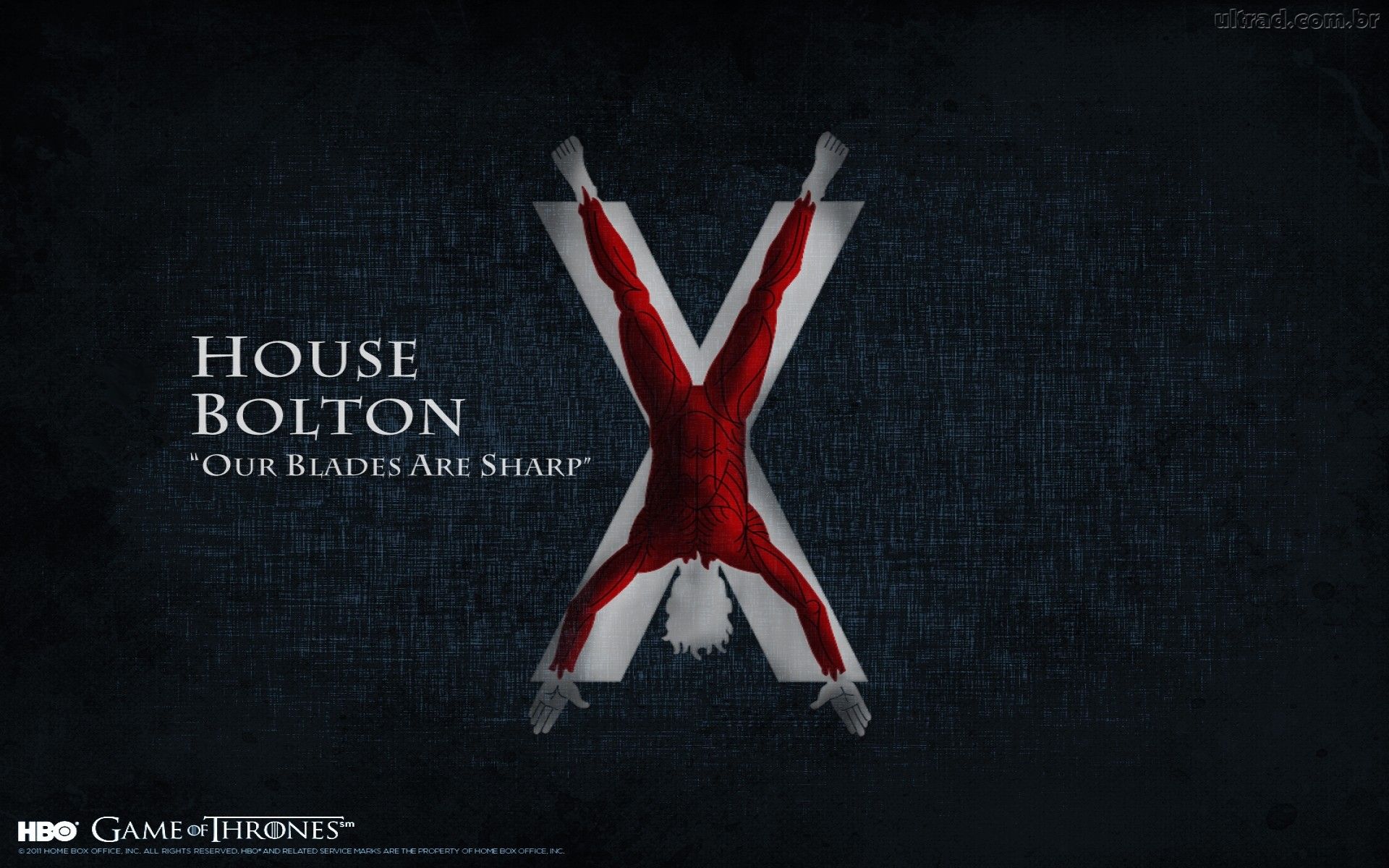
In the Age of Heroes, the Red Kings of House Bolton were said to have worn cloaks made from the skins of their rivals, the Kings of Winter from House Stark. To remove the skin in one piece for later use there are two main methods, both used on larger animals. Open skinning involves making one cut from the anus up to the lower lip and another four cuts along the limbs, the skin can then be opened and removed. Dorsal skinning, the other main method involves making a cut along the spine and pulling the skin off this way. A different method, usually used on smaller animals, that leaves the skin intact is case skinning, this entails starting the cut at the ankle, going up the leg and down the other leg, until the skin can be pulled off in one. This method requires the carcass to be hanging upside down, and would suit the X-shaped cross seen on the HBO series.
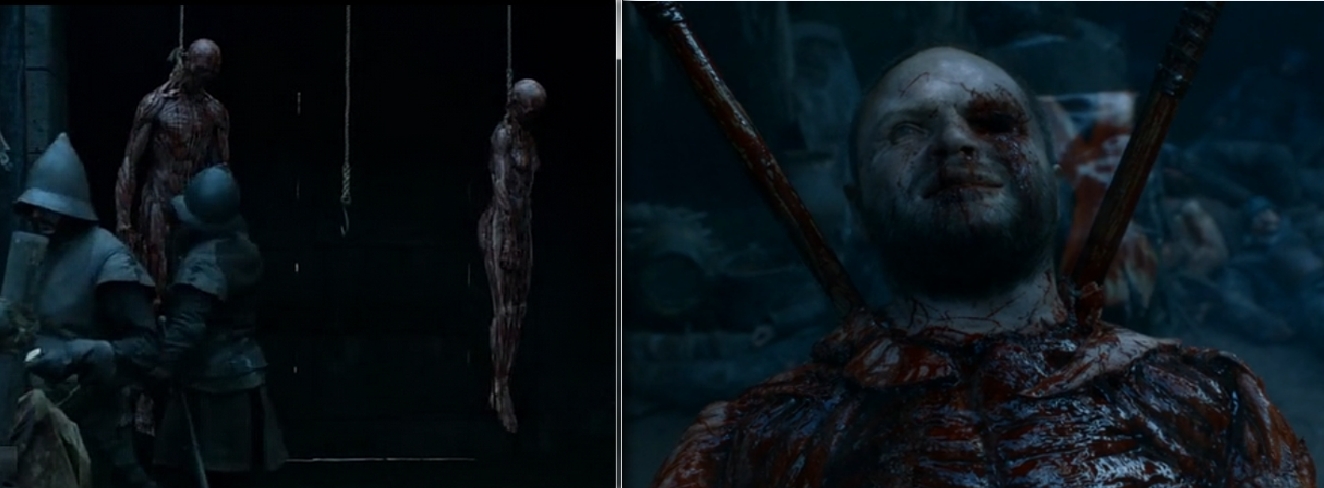
During the HBO series there are three occasions when we see the corpses of people flayed by the Boltons. In series 4 episode 8 ‘The Mountain and the Viper’ and series 5 episode 7 ‘The Gift,’ the flayed bodies of the ironborn and the serving woman still have skin remaining on their heads. Ramsay mentions that the serving woman died before he reached her face. However, this is probably a plot device to allow the viewer to see who has been flayed. In series 5 episode 3 ‘High Sparrow’ Lord Cerwyn and his family have been completely flayed, their characters are not seen prior to their skinless bodies being displayed at Winterfell.
The Bolton Blade. In Histories and Lore: House Bolton (narrated by Michael McElhatton), Roose Bolton tells that his ancestors passed down “not a Valyrian greatsword but a knife honed and thin enough to fit between the topmost layer of skin and the tissue below, and peel.” What would the ancestral flaying blade of House Bolton look like?
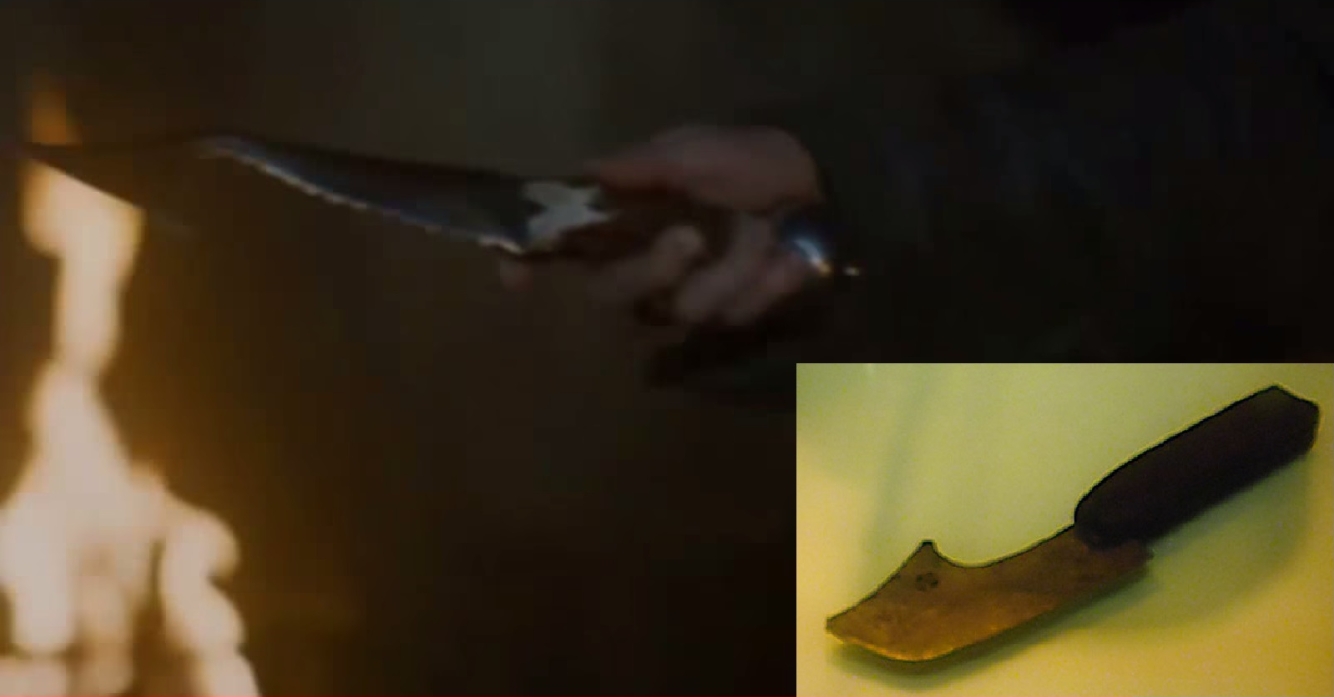
In season 3 episode 7 ‘The Bear and the Maiden Fair’, we see Ramsay wield a distinctive blade which he used to castrate Theon Greyjoy. Interesting though this blade is, it is not a flaying knife, it appears that the prop blade is made from a combat knife cut down to resemble a castration knife of the type preserved in the Eunuch Museum at the mausoleum of Tian Yi, in a suburb of Beijing. Interestingly, Yi Tian is the term for a native of the Golden Empire of Yi Ti in Essos. The four-inch blade of the Chinese castration knife has a hook-like cut out in the lower edge of the blade, allowing it to be pulled in a sickle motion to remove the entire genitals in the Imperial Chinese manner of castration. The more conventional point and forward part of the blade, if they held an edge in antiquity, were presumably used to finish off the cut.
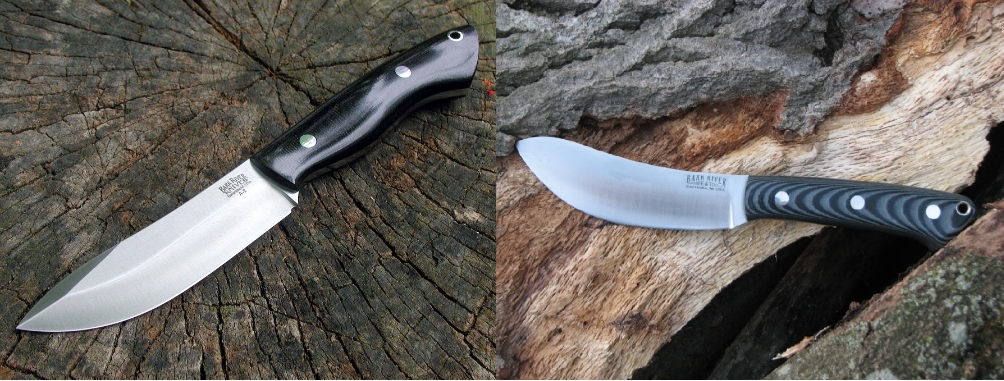
Actual skinning knives have a wide variety of designs but important for skinning are a high tip, above the level of the handle, with a rounded sweeping curve to the belly of the blade. The flaying knife of the Boltons need not look particularly exotic or unusual. What is clear, if it was as thin and sharp as Roose Bolton says, knowing what we do now about skinning, it would be virtually impossible to remove a skin in one piece using such a knife. It is probably safer to assume that his description of the knife is for dramatic effect, “few weapons are as effective as terror.”

For further data about the best kind of blade for flaying we need to look at the most common archaeological evidence for the violent removal of human skin, Native American scalping. Most of the Native American tribes practiced scalping, and the practice spread to Europeans in North America. In the American Civil War (1861-1865) Bloody Bill Anderson’s Confederate guerrillas decorated their saddles with the scalps of Union soldiers they had killed. The Native American scalping technique used was to kneel or stand on the back of the dead or defeated enemy, grab the hair with one hand, make a series of semi-circular cuts around the hairline and then tear the scalp off with brute force. Although there is subcutaneous (immediately below the skin) bone on the scalp, it is the thickest area of skin on the human body. When pulled, the scalp separates at the areolar connective tissue, the fourth and weakest of the five layers of human scalp.

Many archaeological sites in America that have large numbers of Native American skeletons thought to have been massacred by other tribes have evidence of scalping on the skulls. Cuts on the frontal bone (brow area) and the occipital bone (back of the head) showing no signs of healing, which mean they were done near or after the time of death, are the hallmark of scalping. The Crow Creek Massacre took place in South Dakota around AD 1325, at least 486 people were killed and buried in the defensive ditch around a fort, scalping cuts were clearly seen on at least 90% of the skeletons and as many as 100% of the skeletons could have been scalped. The knives used for scalping by the Native Americans seem to have been simple all-purpose hunting or survival knives made from stone, bone or steel. Native American steel blades referred to as scalping knives were actually made in Europe to trade with the Native American tribes and the name ‘scalping knife’ was given to them by the Europeans to help sell them to the tribes. Most of the English-made scalping knives were made in Sheffield.
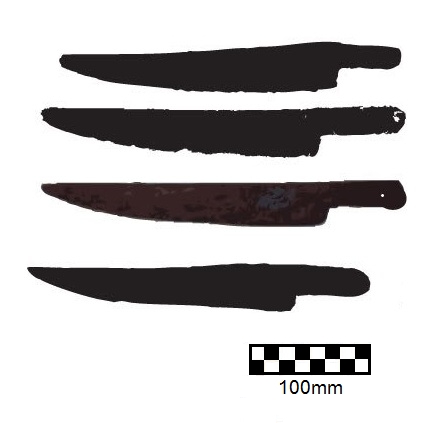
So there we have the evidence that the flaying knife of the Boltons would not have looked like anything out of the ordinary, a practical design with a point higher than the handle, a rounded sweeping curve to the blade and perhaps a blunt guide area on the back of the blade. After the first incision, the blade will be turned over and inserted in the cut with the edge of the blade on top, the blunt guide area on the back of the blade stops the point from going too far down and damaging the underlying meat in a hunt kill processing situation. Or, in a Dreadfort flaying it would limit blood loss and prolong the torture. The Bolton flaying knife doubtless originated as a hunting knife, as hunting seems to be a sport reserved for the nobility in Westeros, much as it was in medieval Europe. The last Red King of the Dreadfort was known as Rogar the Huntsman, he bent the knee to the Starks at the beginning of the Andal Invasion, clearly he enjoyed the hunt, but were his hunts the same as those led by Ramsay Bolton and his girls in later years?
 Archaeology Game of Thrones
You must be logged in to post a comment.